Getting a text from a 213 area code can make you pause for a second.
You may recognize the area code, or you may wonder why someone from that number is messaging you.
The good news is that a 213 number is associated with Los Angeles, California. But the area code alone does not prove where the sender is located.
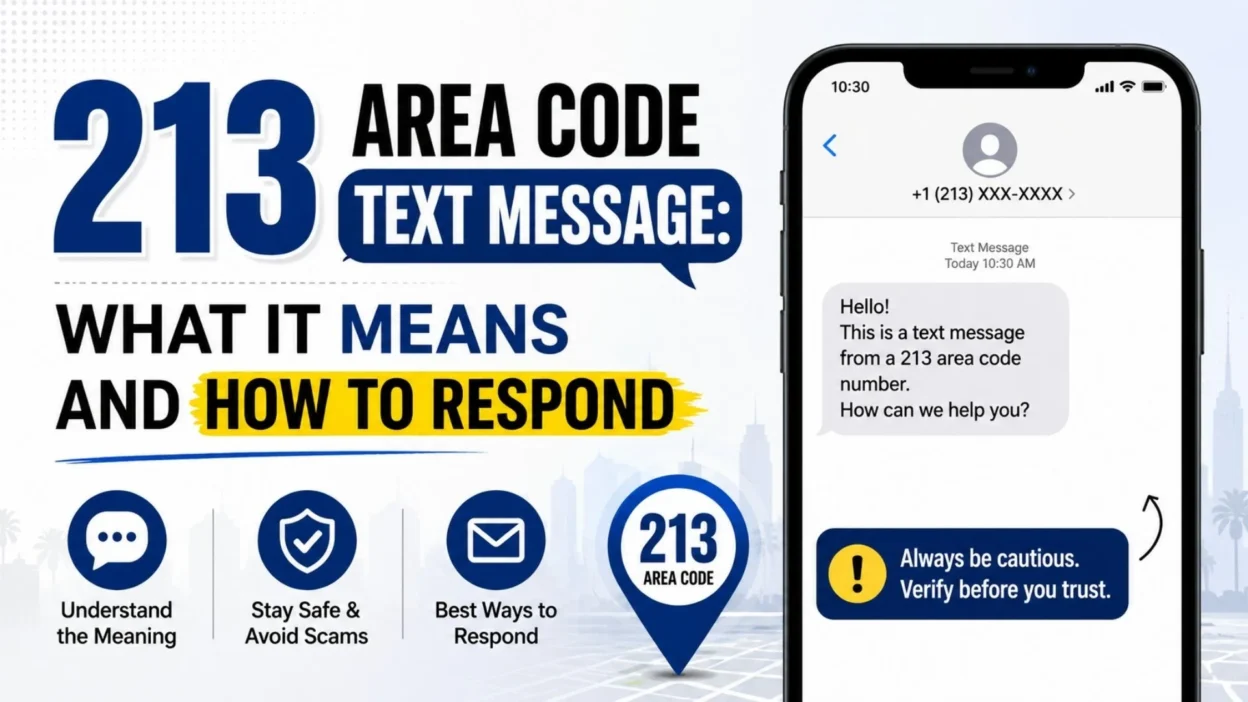
Here is a simple guide to 213 area code text messages, common messages you may receive, warning signs to watch for, and safe ways to respond.
What Is the 213 Area Code?
The 213 area code is one of the well-known area codes serving Los Angeles.
It is strongly associated with central Los Angeles and surrounding communities.
- 213 is a California telephone area code.
- It is closely linked with Los Angeles.
- It has been in use since 1947.
- The area code covers a relatively small part of the larger Los Angeles region today.
- A number beginning with 213 may belong to a person, business, or organization.
- Mobile phones can also use 213 numbers.
- Text messages can come from both local and non-local users.
- Seeing 213 does not automatically mean the sender lives in Los Angeles.
- People can keep phone numbers after moving.
- Businesses may use local numbers for customer communication.
- Internet-based phone services can also use local-looking numbers.
- Caller ID and text sender information can sometimes be misleading.
- A familiar area code does not guarantee that a message is genuine.
- You should judge the message by its content and context.
- Never share sensitive information simply because a number looks local.
Why Did I Get a 213 Area Code Text Message?
There are several normal reasons you might receive a message from a 213 number.
- A friend may have a Los Angeles phone number.
- A business may be contacting you.
- Someone may have the wrong number.
- You may have forgotten a contact’s old number.
- A service provider may send an automated notification.
- A delivery company may send an update.
- A local business may send an appointment reminder.
- Someone may have recently moved but kept their number.
- A new contact may have found your number through a legitimate service.
- A group message may include an unfamiliar number.
- A customer service system may use a 213 number.
- A marketing company may send a promotional message.
- Someone may simply be trying to start a conversation.
- The message could have been sent accidentally.
- In some cases, it may be unwanted spam.
The important thing is not to assume the reason immediately.
Look at what the message actually says.
Is a 213 Area Code Text Message Legit?
A 213 area code text message can absolutely be legitimate.
The area code itself is not a warning sign.
- A 213 number can belong to a real person.
- A legitimate company can use a 213 number.
- A local business may contact customers by text.
- Appointment reminders may arrive from 213 numbers.
- Delivery updates may use local numbers.
- Friends can send ordinary messages from 213 numbers.
- A wrong-number message can be completely harmless.
- Automated notifications can also look unfamiliar.
- Some legitimate services use text-enabled phone numbers.
- A local-looking number can still belong to someone outside California.
- A suspicious message can also come from a 213 number.
- Scammers can spoof or manipulate caller information.
- A familiar area code does not verify identity.
- Links should be checked carefully before opening.
- Requests for money or private information deserve extra caution.
Think of the area code as a clue, not proof.
Common 213 Area Code Text Messages
Not every unexpected message is suspicious.
Some messages are simply ordinary communication.
- “Hi, is this Sarah?”
- “Are you still available today?”
- “Can you call me when you get a chance?”
- “Your appointment is confirmed.”
- “Your order has shipped.”
- “Are we still meeting at 6?”
- “Thanks for helping me earlier!”
- “Sorry, I think I have the wrong number.”
- “Can you send me the address?”
- “Are you near downtown?”
- “I wanted to ask you something.”
- “Did you receive my email?”
- “Can you confirm your appointment?”
- “I saved the wrong contact.”
- “Hey, long time no talk!”
A simple message does not automatically mean something is wrong.
If you do not recognize the sender, you can simply avoid engaging until you know who they are.
Funny 213 Area Code Text Messages
Sometimes an unexpected message is more amusing than alarming.
A wrong number can create a surprisingly funny conversation.
- “Hi! Wrong number, but excellent timing.”
- “I think your contacts sent you on a tiny adventure.”
- “You have reached the wrong person, but I respect the confidence.”
- “Plot twist: I have no idea who you are.”
- “Wrong number. Right level of mystery.”
- “I believe your text took a scenic route.”
- “Nope, but now I am curious.”
- “Your phone appears to have chosen chaos.”
- “I think your contact list needs a quick meeting.”
- “Wrong number, friend. The mystery continues.”
- “I am not the person you are looking for.”
- “Your text has entered an unexpected inbox.”
- “Nice message. Wrong audience.”
- “I think your phone needs better directions.”
- “You missed your destination by one text.”
Keep humor friendly if you decide to reply.
How to Respond to an Unknown 213 Number
You do not have to respond to every unfamiliar number.
If the message seems harmless, a short response is usually enough.
- “Hi, who is this?”
- “I don’t recognize this number.”
- “I think you may have the wrong number.”
- “Can you remind me who you are?”
- “Sorry, I don’t have this number saved.”
- “Who am I speaking with?”
- “I believe you have the wrong person.”
- “Could you explain why you’re contacting me?”
- “I don’t recognize this conversation.”
- “Please confirm who this message is for.”
- “I think this message was meant for someone else.”
- “Sorry, I can’t identify this number.”
- “Can you tell me your name?”
- “I don’t usually respond to unknown numbers.”
- “Please contact me through the usual channel.”
If the response feels strange, you can simply stop replying.
When You Should Not Reply
Some texts are better left unanswered.
Be especially careful when the message asks you to act quickly.
- The sender asks for money.
- The sender requests a password.
- The sender asks for a verification code.
- The message contains a suspicious link.
- The sender claims you won a prize.
- The message creates extreme urgency.
- The sender threatens consequences.
- The sender asks for banking information.
- The sender requests personal identification details.
- The message asks you to download an unknown app.
- The sender asks you to move the conversation to another platform.
- The message contains strange payment instructions.
- The sender refuses to identify themselves.
- The sender keeps contacting you after you ask them to stop.
- The story changes whenever you ask questions.
When several warning signs appear together, do not engage.
Signs a 213 Text May Be Spam
Spam messages often follow recognizable patterns.
One strange message does not prove anything, but repeated warning signs deserve attention.
- You have no idea who the sender is.
- The message contains an unexpected link.
- The sender promises easy money.
- The message says you have won something.
- The sender asks for personal information.
- The sender uses unusual grammar or wording.
- The message creates unnecessary urgency.
- The sender wants payment through an unusual method.
- The message claims your account will be closed.
- The sender asks you to verify information you never requested.
- The message contains a suspicious website address.
- The sender avoids answering simple questions.
- The conversation quickly turns into a financial request.
- The sender asks you to keep the conversation secret.
- Similar messages arrive repeatedly.
Your safest response may be no response at all.
What Does a Wrong-Number Text Mean?
A wrong-number text can happen to anyone.
People mistype digits, save old contacts, or simply send a message to the wrong person.
- Someone may have entered one digit incorrectly.
- A contact may have changed their phone number.
- The sender may have saved an outdated number.
- A business employee may have typed the wrong contact.
- An automated system may contain an incorrect number.
- Someone may have confused two contacts.
- A friend may have given another person an old number.
- A number may have been reassigned to a new owner.
- The sender may genuinely believe they know you.
- A group conversation may have included you by mistake.
- The message may have been sent accidentally.
- A phone contact may have synced incorrectly.
- The sender could simply have made a typing mistake.
- The conversation may end after you explain the mistake.
- You do not need to continue chatting if you are uncomfortable.
A polite “wrong number” message is often enough.
Could a 213 Text Be a Scam?
Yes, a scammer can use a number with a 213 area code.
However, the area code does not tell you whether a message is a scam.
- Scammers can use different phone numbers.
- They may pretend to be businesses.
- They may pretend to be friends or acquaintances.
- They may start with a simple greeting.
- They may slowly build trust.
- They may eventually request money.
- They may send links to fake websites.
- They may ask for account information.
- They may request verification codes.
- They may create a fake emergency.
- They may promise an investment opportunity.
- They may claim you have won a reward.
- They may ask you to move to another messaging platform.
- They may pressure you to respond quickly.
- They may become more aggressive if you refuse.
Focus on the behavior and request, not just the area code.
How to Check an Unknown 213 Number
You can take a few simple steps before responding.
- Search the number online.
- Check whether your phone identifies the sender.
- Look through your contacts carefully.
- Check recent appointments or deliveries.
- Think about businesses you recently contacted.
- Review recent orders or bookings.
- Ask a trusted person if they recognize the number.
- Check whether the message mentions a real service you use.
- Contact the claimed company through its official website.
- Do not use a suspicious link provided in the message.
- Never share a one-time verification code.
- Do not send payment to an unknown person.
- Block the number if the messages continue.
- Report suspicious messages through your phone or carrier.
- Keep a record if the messages become persistent or threatening.
A few minutes of checking can prevent a lot of trouble.
213 Area Code Text Message From a Business
Businesses sometimes use local numbers to communicate with customers.
This can include reminders, updates, and customer support.
- Appointment confirmations
- Delivery notifications
- Order updates
- Service reminders
- Customer support messages
- Booking confirmations
- Reservation updates
- Promotional offers
- Store notifications
- Event reminders
- Account alerts
- Survey invitations
- Customer feedback requests
- Schedule changes
- Service announcements
If you are unsure whether the message is genuine, contact the business using information from its official website or a statement you already trust.
213 Area Code Text Message From a Friend
A friend may have a 213 number even if you do not live in Los Angeles.
Phone numbers can stay with people when they move.
- They may have lived in Los Angeles previously.
- They may still use an old number.
- They may have moved to another state.
- They may travel frequently.
- They may use a mobile number registered in Los Angeles.
- They may have recently changed carriers.
- They may have saved your number incorrectly.
- They may be contacting you from a new phone.
- They may have lost access to their old number.
- They may be reconnecting after a long time.
- They may be using a second phone.
- They may be texting from a business phone.
- Their number may have been reassigned.
- Their message may simply be unexpected.
- You can ask them to identify themselves before continuing.
Never assume a number’s location tells the whole story.
How to Reply to a Friendly Unknown Number
If the message sounds normal, you can keep your response simple.
- “Hey! Who is this?”
- “Hi! I don’t have this number saved.”
- “Hello, can you remind me who you are?”
- “Sorry, I don’t recognize this number.”
- “Hi there. Who am I speaking with?”
- “I may have missed saving your number.”
- “Can you remind me where we know each other from?”
- “Hey, is this about something we discussed?”
- “Hi! Please remind me of your name.”
- “I don’t recognize this number, sorry.”
- “Can you tell me who this is?”
- “Hey! I think I lost your contact.”
- “Sorry, new number?”
- “Hi! What’s up?”
- “Hello. How can I help?”
Do not provide personal details just to prove who you are.
Short Replies for a Wrong Number
If you know the sender has contacted the wrong person, keep things brief.
- “Sorry, wrong number.”
- “I think you have the wrong person.”
- “Wrong number, sorry!”
- “I don’t think this message was meant for me.”
- “You may want to check the number.”
- “I believe you have the wrong contact.”
- “Sorry, I don’t know anyone by that name.”
- “This isn’t the person you’re trying to reach.”
- “I think your message went to the wrong number.”
- “Wrong inbox!”
- “Sorry, I can’t help with this.”
- “You have the wrong contact.”
- “I think there’s been a mix-up.”
- “This number doesn’t belong to that person.”
- “Please check the number before sending another message.”
Then you can stop responding.
Should You Block a 213 Number?
Blocking a number is reasonable when messages become unwanted or suspicious.
You do not need to keep responding to someone who makes you uncomfortable.
- Block repeated spam messages.
- Block persistent unwanted contacts.
- Block numbers sending suspicious links.
- Block people requesting sensitive information.
- Block messages that continue after a clear warning.
- Block obvious promotional spam.
- Block suspicious automated messages.
- Block numbers pretending to be someone you know.
- Block repeated wrong-number messages.
- Block aggressive or threatening communication.
- Report spam when your phone provides that option.
- Keep evidence if the messages are serious.
- Do not engage simply because the sender keeps texting.
- Review your messaging privacy settings.
- Contact your carrier if unwanted messages become frequent.
Blocking is often the simplest solution.
How to Report a Suspicious Text
If a message looks suspicious, you may be able to report it through your messaging app or mobile carrier.
The exact steps depend on your phone and service.
- Use your phone’s spam-reporting option.
- Mark suspicious messages as junk when available.
- Block the sender.
- Report fraudulent messages to the appropriate service.
- Contact your carrier if spam becomes persistent.
- Save screenshots of important messages.
- Keep the sender’s number.
- Record dates and times if the messages continue.
- Do not click suspicious links.
- Do not reply to obvious scam messages.
- Do not forward suspicious links to friends.
- Contact a company directly if its name is being misused.
- Use official contact information instead of message links.
- Change passwords if you accidentally shared account information.
- Seek appropriate help if you believe you have been defrauded.
Reporting can help reduce repeated unwanted messages.
213 Area Code vs. Other Los Angeles Area Codes
Los Angeles uses multiple area codes.
That means a Los Angeles phone number does not always begin with 213.
- 213 is strongly associated with central Los Angeles.
- 310 is another well-known Los Angeles-area code.
- 323 has historically served many Los Angeles communities.
- 424 is used in parts of the Los Angeles region.
- 818 serves parts of the San Fernando Valley.
- 747 also serves parts of the San Fernando Valley.
- 562 covers areas around southeastern Los Angeles County.
- 626 covers parts of the San Gabriel Valley.
- 661 covers parts of northern Los Angeles County and nearby areas.
- Different neighborhoods can have different area codes.
- Mobile numbers can make location assumptions less reliable.
- People can keep numbers after moving.
- Businesses may use numbers outside their physical location.
- An area code is not a precise GPS location.
- Always consider the full context of the message.
This is why a 213 number should not be treated as proof of someone’s current location.
Can You Trust the 213 Area Code?
You can trust that 213 is a real California area code.
You should not treat the area code itself as proof that a text is safe.
- The area code is legitimate.
- Real people use 213 numbers.
- Real businesses use 213 numbers.
- Spam can also come from 213 numbers.
- Scammers may use local-looking numbers.
- Phone numbers can be spoofed.
- People can move without changing numbers.
- Mobile numbers do not provide an exact current location.
- A local number can contact someone anywhere.
- A familiar area code does not verify identity.
- A suspicious request remains suspicious.
- Unexpected links should be treated carefully.
- Financial requests deserve extra caution.
- Verification codes should never be shared.
- Your best guide is the message’s behavior and context.
Simple Safety Rules for Unknown Texts
You do not need complicated technology to handle unfamiliar messages safely.
A few basic habits can make a big difference.
- Pause before responding.
- Do not click unexpected links.
- Never share passwords.
- Never share one-time verification codes.
- Avoid sending financial information.
- Do not send money to unknown contacts.
- Verify businesses independently.
- Do not trust urgency alone.
- Ask who the sender is.
- Check whether the message makes sense.
- Look for unusual requests.
- Block persistent spam.
- Report suspicious messages.
- Keep important evidence.
- Trust your instincts if something feels wrong.
When in doubt, do less rather than more.
Funny Ways to Describe a Random 213 Text
If the message turns out to be harmless, you can have a little fun with it.
- “My inbox just received a surprise guest.”
- “Today’s mystery has arrived by text.”
- “Apparently, my phone has made new friends.”
- “This conversation was not on today’s schedule.”
- “The wrong-number universe has chosen me.”
- “My inbox just unlocked a mystery level.”
- “Unexpected text: 1. Me: confused.”
- “Well, this wasn’t on my notification bingo card.”
- “My phone has entered random-message mode.”
- “I ordered no mystery, yet here we are.”
- “This text arrived with zero context.”
- “The plot has entered my inbox.”
- “I have questions, and apparently so does your contact list.”
- “Today’s surprise comes with a phone number.”
- “Wrong number, unexpected entertainment.”
Keep these for harmless situations, not suspicious ones.
What to Do After Receiving a 213 Area Code Text Message
The best response depends on the message.
You can use a simple decision process.
- Recognize the sender? Reply normally.
- Do not recognize them? Ask who they are.
- Looks like a wrong number? Politely say so.
- Contains a suspicious link? Do not click it.
- Requests money? Do not send anything.
- Requests a password? Do not share it.
- Requests a verification code? Never provide it.
- Claims to be a company? Verify independently.
- Keeps sending spam? Block the number.
- Looks fraudulent? Report it.
- Feels uncomfortable? Stop responding.
- Seems harmless? A short reply may be enough.
- Creates urgency? Slow down and verify.
- Pretends to be someone you know? Contact that person another way.
- You are unsure? Do not take action until you can verify the sender.
The safest habit is simple: verify first, respond second.
FAQs
What is the 213 area code?
The 213 area code is a California telephone area code associated with Los Angeles, particularly central parts of the city.
A 213 number can belong to an individual, business, or organization.
Is a 213 area code text message a scam?
Not necessarily. Many legitimate people and businesses use 213 numbers.
However, scammers can also use local-looking numbers, so check the message rather than trusting the area code alone.
Should I reply to an unknown 213 number?
You do not have to. If the message seems harmless, you can ask, “Who is this?” If it contains suspicious links, money requests, or other warning signs, avoid replying.
What should I do if a 213 number keeps texting me?
Block the number and use your phone’s spam-reporting feature if available. If the messages involve threats, fraud, or serious harassment, save the messages and seek appropriate assistance.
Can a 213 number be outside Los Angeles?
Yes. People can keep their phone numbers when they move, and mobile or internet-based numbers do not necessarily show someone’s current location.
Conclusion
Receiving a 213 area code text message does not automatically mean something is wrong.
It could be a friend, business, wrong number, notification, or unwanted spam. The safest approach is to look at the message itself, avoid suspicious links, protect your private information, and verify unexpected requests.
If this guide helped you understand a mysterious text, save it, share it with a friend, or leave a comment with your experience. You never know when another mystery number will appear in your inbox. 📱

Muhammad Shahroz is a passionate writer who creates helpful content about messages and word meanings. He is committed to providing clear, accurate, and easy-to-understand information on TextsMessagez.com.