Seeing the phrase iCloud Login Meaning and wondering what it actually refers to? You are not alone.
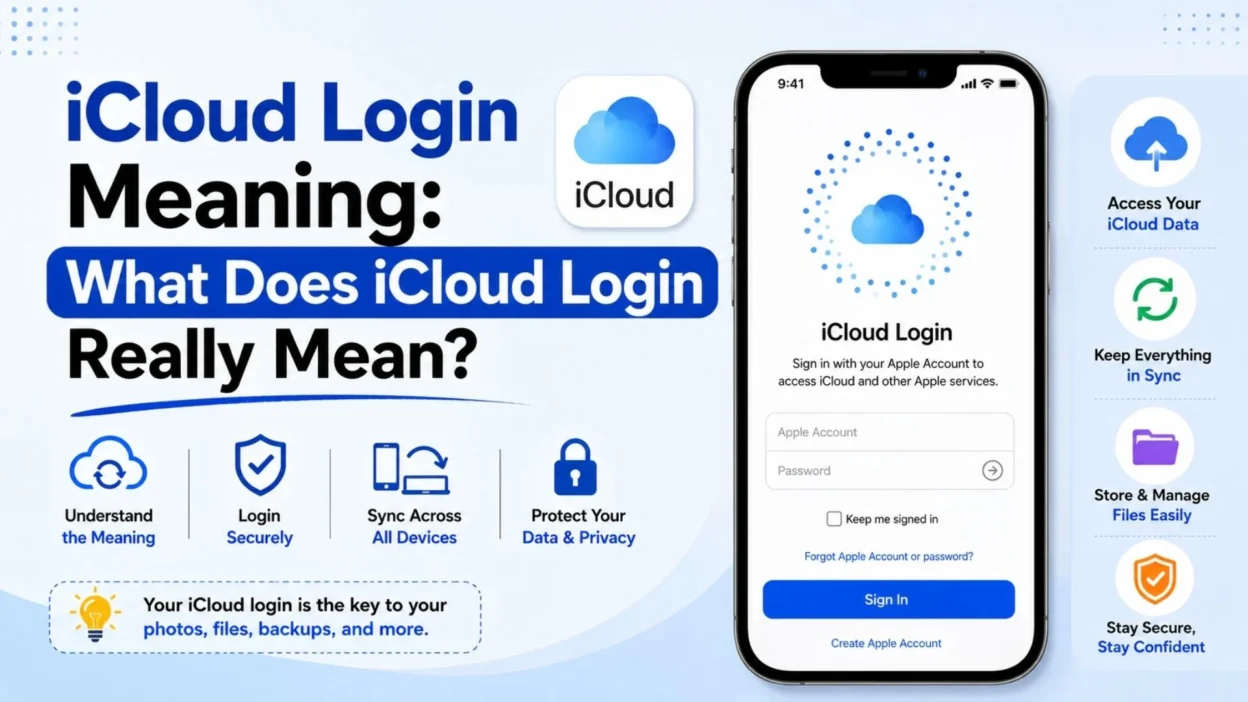
An iCloud login is basically the sign-in process used to access Apple’s cloud services, files, photos, backups, and more.
In simple words, it is your digital key to your Apple cloud account. No tiny key required, thankfully!
1. What Is the iCloud Login Meaning?
The easiest way to understand an iCloud login is to think of it as your sign-in to Apple’s cloud services.
- iCloud login lets you access your iCloud account.
- It connects your Apple device to Apple’s cloud storage.
- You usually sign in with your Apple Account.
- Your Apple Account was previously called an Apple ID.
- The login can be used on iPhone, iPad, Mac, and the web.
- It helps sync your information across Apple devices.
- Photos can stay connected through iCloud Photos.
- Contacts can sync through iCloud.
- Notes can also sync across supported devices.
- iCloud Drive stores supported files online.
- Device backups can use iCloud.
- Your login helps Apple know which account belongs to you.
- It keeps your cloud information linked to your account.
- You may need your password during sign-in.
- Some accounts also require a verification code.
- A successful login gives you access to available iCloud features.
2. Is iCloud Login the Same as Apple ID Login?
This can sound confusing because Apple changed the name Apple ID to Apple Account.
- Apple ID is the older name.
- Apple Account is the newer name.
- Both refer to the same basic account system.
- Your existing Apple ID credentials continue to work.
- iCloud uses your Apple Account for authentication.
- Your email address may still look like an Apple ID login.
- You do not normally need a separate iCloud account.
- One Apple Account can work across multiple Apple services.
- App Store access can use the same account.
- iCloud can use the same account.
- Apple Music can also connect to your account.
- Your devices can be associated with the account.
- The name change does not mean you lost your account.
- Your old login details do not suddenly disappear.
- Think of Apple Account as the updated label.
- The important part is using the correct credentials.
3. Why Do People Search for iCloud Login Meaning?
People often see “iCloud login” in different places and wonder what it means.
- You may see it while setting up an iPhone.
- You may see it when opening iCloud settings.
- A website may ask you to sign in.
- A device may request your Apple Account password.
- You may receive a login notification.
- Someone may mention an iCloud login during troubleshooting.
- You may be signing into a new Apple device.
- You may be checking your cloud files.
- You may be restoring information from a backup.
- You may have forgotten your account details.
- You may be trying to understand a security alert.
- You may see the term in an online guide.
- Search results can also use the phrase.
- Repair guides commonly mention iCloud login.
- New Apple users may find the wording confusing.
- The meaning is usually simple: sign in to your Apple cloud account.
4. What Happens During an iCloud Login?
An iCloud login is more than simply typing an email address.
- You enter your Apple Account email or phone number when requested.
- You enter your account password.
- Apple checks your sign-in information.
- Security checks may happen.
- A verification code may be requested.
- Trusted devices can help confirm your identity.
- Successful verification completes the sign-in.
- Your account becomes available on the device.
- iCloud services can begin syncing.
- Available cloud data may appear.
- Photos can start syncing if enabled.
- Contacts can sync if enabled.
- Notes can sync if enabled.
- iCloud Drive can become available.
- Backup settings can connect to your account.
- The process helps protect your private information.
5. What Does iCloud Login on an iPhone Mean?
On an iPhone, iCloud login usually means signing into your Apple Account.
- It connects the iPhone to your Apple Account.
- It can enable iCloud services.
- It can support iCloud backups.
- It can sync selected information.
- It can connect iCloud Photos.
- It can connect Find My features.
- It can support iCloud Drive.
- It can sync contacts.
- It can sync calendars.
- It can sync notes.
- It can support passwords and related data.
- Settings depend on the services you enable.
- Some features require additional security checks.
- A new iPhone may ask for account information.
- Signing out can stop certain syncing features.
- Your iPhone does not need a mysterious “cloud password.”
- It needs the credentials for your Apple Account.
6. What Does iCloud Login on a Mac Mean?
On a Mac, iCloud login connects macOS with your Apple Account.
- It can sync supported iCloud information.
- iCloud Drive can appear in Finder.
- Photos can sync through iCloud Photos.
- Notes can remain available across devices.
- Contacts can sync with supported settings.
- Calendars can stay connected.
- Safari data can sync when enabled.
- Password-related features can work across supported devices.
- Find My can help locate your Mac.
- Your Mac can access your iCloud account.
- Settings control which services are synchronized.
- You can manage iCloud storage from settings.
- You can sign out when needed.
- Signing out may affect local and cloud data choices.
- Apple may ask you to confirm your identity.
- The basic meaning remains the same: access your Apple cloud account.
7. What Is an iCloud Login Email?
Your iCloud login email is not necessarily a special password or separate account.
- Your Apple Account may use an email address.
- Some users have an iCloud email address.
- Others may use another email address for their Apple Account.
- The login identifier depends on your account.
- Your iCloud email and Apple Account email can be related.
- They are not automatically identical in every situation.
- An iCloud.com email can be used for Apple services.
- Your account may have multiple associated addresses.
- Apple provides account management options.
- You should use the address associated with your account.
- Avoid guessing an old email address.
- Check your device account settings if you are unsure.
- Account recovery can help when details are forgotten.
- Never share your password with strangers.
- Be careful with unexpected login requests.
- Correct account details make signing in much easier.
8. Is iCloud Login Safe?
Yes, iCloud login is designed to protect your Apple Account and cloud data.
- Use a strong and unique password.
- Turn on two-factor authentication.
- Keep your trusted phone number updated.
- Protect your trusted Apple devices.
- Avoid sharing verification codes.
- Never send your password through random messages.
- Check unexpected sign-in notifications carefully.
- Avoid suspicious login pages.
- Verify the website before entering credentials.
- Do not trust messages that create unnecessary panic.
- Be cautious with urgent security claims.
- Keep your Apple devices updated.
- Use device passcodes.
- Review account security information regularly.
- Sign out of devices you no longer use.
- Security works best when you stay alert.
9. Why Does Apple Ask for an iCloud Login?
Apple may request your login when it needs to verify your account.
- You may be setting up a new device.
- You may be restoring a device.
- You may be enabling iCloud.
- You may be downloading an app.
- You may be changing account settings.
- You may be accessing protected information.
- You may be signing into a new browser.
- You may be updating security settings.
- You may be using a service connected to your account.
- You may have recently changed your password.
- Apple may need additional verification.
- A security code may be required.
- Your device may need to reconnect to your account.
- Some features require account authentication.
- The request does not automatically mean something is wrong.
- It is often a normal security step.
10. What If You Forget Your iCloud Login Password?
Forgetting a password happens. Even digital superheroes occasionally forget passwords.
- Do not keep guessing random passwords.
- Use Apple’s official account recovery options.
- Follow the identity verification steps.
- Use a trusted device when available.
- Use your trusted phone number when requested.
- Check whether you recently changed the password.
- Avoid password-reset links from suspicious messages.
- Never pay a stranger to “unlock” your account.
- Keep recovery information current.
- Store important passwords securely.
- Consider using a trusted password manager.
- Do not share verification codes.
- Be patient during account recovery.
- Security checks may take time.
- Follow the instructions shown by Apple.
- Once recovered, create a strong password you can manage safely.
11. What Does “iCloud Login Required” Mean?
This message usually means your device or service needs account authentication.
- Your session may need verification.
- Your password may need to be entered again.
- A security check may be pending.
- Your account connection may have changed.
- You may have recently updated credentials.
- The device may need to reconnect to iCloud.
- Internet connectivity can affect the process.
- Apple services may occasionally experience temporary issues.
- Restarting the device can sometimes help.
- Check your account information carefully.
- Avoid repeatedly entering an incorrect password.
- Look for any verification prompt.
- Check whether another Apple Account is involved.
- Review your iCloud settings.
- Follow Apple’s on-screen instructions.
- The message does not automatically mean your account is hacked.
12. Can You Use iCloud Without Logging In?
Some Apple features can work without an active iCloud login, but full iCloud functionality requires an account.
- Local files can exist without cloud syncing.
- Some device features work locally.
- Basic phone functions do not depend entirely on iCloud.
- iCloud storage requires an Apple Account.
- iCloud Photos requires the related account setup.
- iCloud Drive needs account access.
- iCloud Backup depends on your account.
- Syncing across devices requires proper account configuration.
- Find My relies on Apple account settings.
- App Store services can also require account authentication.
- Cloud-based data needs an online account connection.
- Signing out can limit synchronization.
- Local data may still remain on a device.
- Some settings can be changed without cloud services.
- Your experience depends on which Apple services you use.
- iCloud is most useful when your account is properly connected.
13. What Is iCloud Login on the Web?
An iCloud login on the web lets you access supported iCloud services through a browser.
- You can sign in from a supported browser.
- You use your Apple Account credentials.
- Apple may request verification.
- Available services depend on your account.
- iCloud web access can be useful on another computer.
- You can access supported cloud information.
- You may view files through iCloud Drive.
- Photos can be available through supported web access.
- Notes can be accessible online.
- Contacts can be available online.
- Calendar information can be available online.
- Find My can provide supported location features.
- Web access does not mean your password is public.
- Always sign out on shared computers.
- Avoid saving credentials on public devices.
- Use trusted networks whenever possible.
14. Is an iCloud Login Different From an iPhone Passcode?
Yes. These are two different security tools.
- An iPhone passcode unlocks the device.
- An Apple Account password protects the account.
- The two credentials serve different purposes.
- Your device passcode may help protect local data.
- Your Apple Account password protects account access.
- A verification code adds another security layer.
- Do not confuse your passcode with your account password.
- Changing one does not necessarily change the other.
- Your iPhone may ask for both at different times.
- A forgotten passcode has a different recovery process.
- A forgotten Apple Account password has its own recovery process.
- Never share either credential unnecessarily.
- Keep both protected.
- Use a memorable but strong device passcode.
- Keep account security information updated.
- Think of them as separate locks for different doors.
15. What Does iCloud Login Failed Mean?
An “iCloud login failed” message means the sign-in attempt did not complete successfully.
- Your password may be incorrect.
- Your account details may be wrong.
- Your internet connection may be unstable.
- Apple services may have a temporary issue.
- The device may need a restart.
- Your account may require additional verification.
- Your password may have been changed recently.
- The device could have outdated software.
- Your network may block certain services.
- Try a trusted internet connection.
- Check the credentials carefully.
- Avoid repeated failed attempts.
- Follow Apple’s account recovery process if necessary.
- Update your device when appropriate.
- Check for service interruptions before panicking.
- A failed login does not automatically mean account compromise.
16. How to Respond to a Suspicious iCloud Login Message
Unexpected login alerts deserve attention, but they do not require panic.
- Read the message carefully.
- Check whether you actually attempted a login.
- Do not click suspicious links.
- Do not provide your password through a message.
- Never share a verification code.
- Check your Apple Account directly through trusted settings.
- Review connected devices.
- Look for unfamiliar activity.
- Change your password if you suspect compromise.
- Make sure two-factor authentication is enabled.
- Avoid calling random numbers provided in suspicious messages.
- Watch for urgent language.
- Be careful with fake “account locked” warnings.
- Verify the source before taking action.
- Use Apple’s trusted support and account tools.
- When in doubt, stop and verify first.
17. Common iCloud Login Mistakes
A few small mistakes can make a simple login feel like a full detective movie.
- Entering the wrong email address.
- Using an old password.
- Confusing an Apple Account password with a device passcode.
- Ignoring a verification-code request.
- Entering credentials on a fake website.
- Sharing a verification code.
- Using an outdated recovery phone number.
- Forgetting that the account name may have changed.
- Repeatedly entering incorrect credentials.
- Using public computers without signing out.
- Saving passwords on unsafe devices.
- Ignoring unusual account notifications.
- Skipping software updates for too long.
- Assuming every security message is genuine.
- Assuming every security message is fake.
- Failing to check the account directly.
18. iCloud Login Tips for New Apple Users
If you are new to Apple devices, these simple habits can save you plenty of confusion.
- Learn your Apple Account email.
- Keep your password private.
- Enable two-factor authentication.
- Add trusted recovery information.
- Use a strong device passcode.
- Keep your software updated.
- Understand what iCloud actually syncs.
- Review your iCloud storage.
- Check which services are enabled.
- Keep important photos and files organized.
- Review your connected devices.
- Sign out from devices you no longer own.
- Be cautious with unexpected messages.
- Never share verification codes.
- Learn how account recovery works.
- Save important security information somewhere safe.
19. iCloud Login and Privacy
Your iCloud account can contain valuable personal information, so privacy matters.
- Use a strong account password.
- Avoid reusing passwords across services.
- Keep two-factor authentication active.
- Protect your trusted devices.
- Review account access regularly.
- Remove devices you no longer use.
- Be careful on shared computers.
- Sign out after using public devices.
- Avoid unknown Wi-Fi networks for sensitive tasks.
- Do not send passwords through chat.
- Do not share security codes.
- Check suspicious account alerts independently.
- Review privacy settings regularly.
- Keep devices updated.
- Be careful about who has physical access to your devices.
- Small security habits can make a big difference.
20. iCloud Login Meaning in Simple Words
If all the technical language feels like alphabet soup, here is the simple version.
- iCloud is Apple’s cloud service.
- Your Apple Account connects you to iCloud.
- An iCloud login means signing into that account.
- The account can connect your Apple devices.
- It can sync supported data.
- It can provide cloud storage.
- It can support backups.
- It can help access photos and files.
- It can support Find My features.
- It can keep selected information synchronized.
- Your password protects the account.
- Two-factor authentication adds extra protection.
- A verification code can confirm your identity.
- Login problems can have several causes.
- Suspicious login requests should be verified.
- In short, iCloud login is your gateway to Apple’s cloud services.
21. How to Keep Your iCloud Login Secure
A secure account starts with a few simple habits.
- Use a unique Apple Account password.
- Make the password difficult for others to guess.
- Turn on two-factor authentication.
- Protect your trusted phone number.
- Keep trusted devices secure.
- Never share verification codes.
- Do not trust random login links.
- Check the sender of unexpected messages.
- Sign out of shared computers.
- Remove old devices from your account when appropriate.
- Keep iOS, iPadOS, and macOS updated.
- Review account activity when something feels unusual.
- Avoid using the same password everywhere.
- Use a reputable password manager if helpful.
- Contact Apple through trusted support channels for serious account problems.
- Remember: a little caution beats a lot of account-recovery drama.
22. Quick iCloud Login Checklist
Before signing in or responding to a login alert, run through this quick list.
- Do I recognize this login request?
- Am I using the correct Apple Account?
- Am I entering my password on a trusted page?
- Is my internet connection secure?
- Is two-factor authentication enabled?
- Do I recognize the verification request?
- Have I recently changed my password?
- Is my trusted phone number current?
- Do I recognize the device requesting access?
- Have I checked my connected devices?
- Am I responding to an unexpected message?
- Does the message contain an unusual link?
- Is someone asking for my verification code?
- Am I using a shared or public computer?
- Have I signed out after using it?
- If something looks strange, have I stopped to verify it?
23. Final Takeaway About iCloud Login Meaning
The iCloud Login Meaning is simple once you break it down.
- It generally means signing into your Apple Account for iCloud services.
- Your Apple Account connects you with supported cloud features.
- iCloud can sync selected information across devices.
- Login may require a password.
- Additional verification may also be required.
- Apple Account and Apple ID refer to the same core account system.
- Your device passcode is different from your account password.
- Login problems do not always mean your account is compromised.
- Check your internet connection when login fails.
- Confirm your account details carefully.
- Keep your recovery information updated.
- Use two-factor authentication.
- Never share verification codes.
- Be careful with unexpected login messages.
- Verify suspicious alerts independently.
- Use trusted Apple tools when managing your account.
- A few good security habits can keep your account much safer.
FAQs
What does iCloud login mean?
iCloud login means signing into your Apple Account to access supported iCloud services. It can connect features such as cloud storage, syncing, backups, and other Apple services.
Is iCloud login the same as Apple ID login?
Yes, in practical terms. Apple has changed the name Apple ID to Apple Account, but the underlying account is still used to access iCloud and other Apple services.
Why is my iPhone asking for an iCloud login?
Your iPhone may ask for your Apple Account password when setting up the device, changing account settings, enabling certain services, or verifying your identity.
Is an iCloud login message a scam?
Not necessarily. Some login alerts are genuine security notifications. However, unexpected messages should be checked carefully. Do not click suspicious links or share passwords and verification codes.
How can I protect my iCloud login?
Use a strong unique password, enable two-factor authentication, protect your trusted devices, keep recovery details updated, and avoid entering account information into suspicious links or websites.
Conclusion
The iCloud Login Meaning is simply the process of signing into your Apple Account to access iCloud and its supported services.
Once you understand the difference between your Apple Account, password, device passcode, and verification code, the whole process becomes much easier.
If this guide helped you understand iCloud login, share it with someone who might be confused about Apple Account sign-ins, or leave a comment with your question.simple ways to stay secure.

Muhammad Shahroz is a passionate writer who creates helpful content about messages and word meanings. He is committed to providing clear, accurate, and easy-to-understand information on TextsMessagez.com.